Overwhelmed by acrylic mediums?
Acrylic Mediums
which one is best for you?
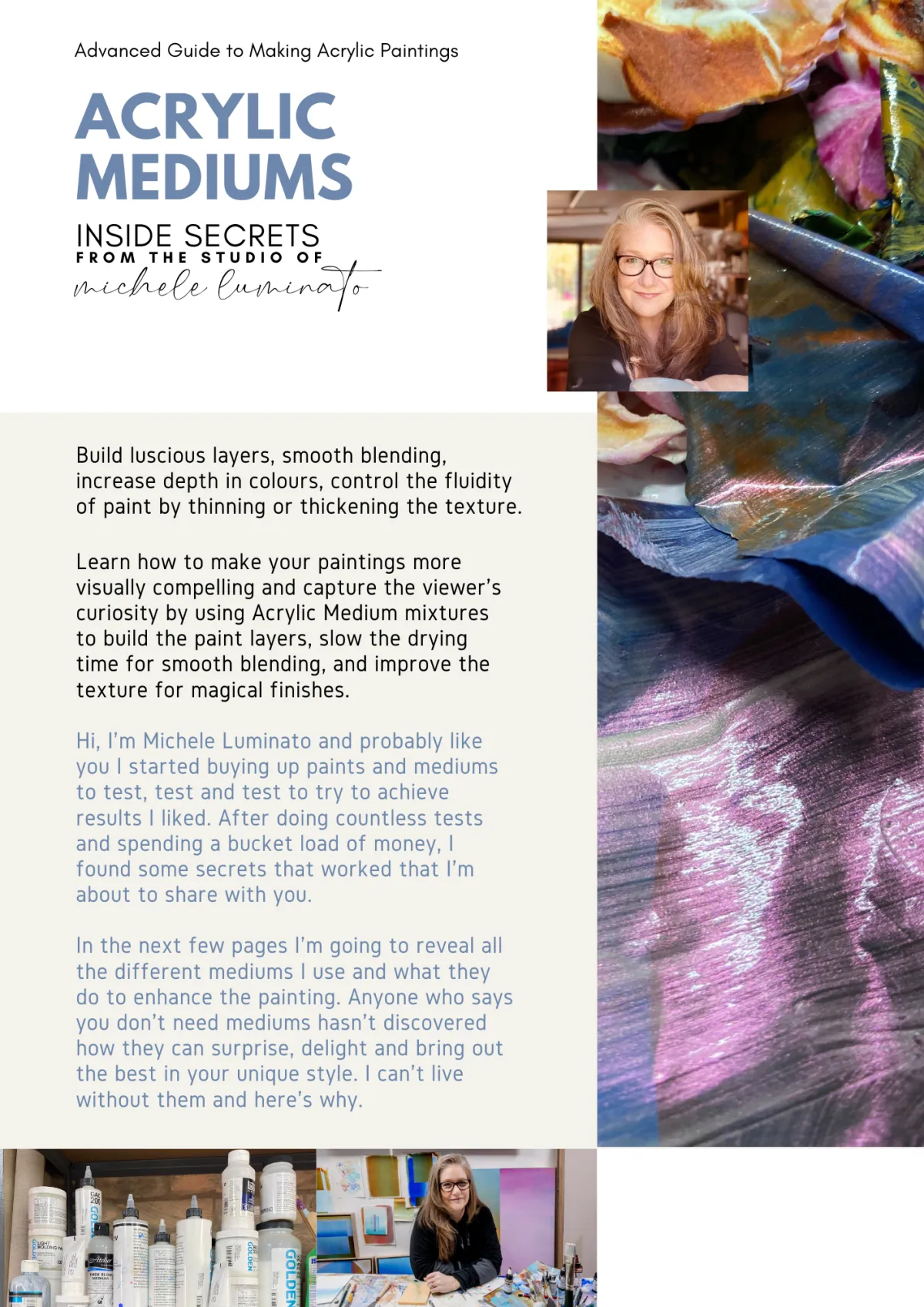
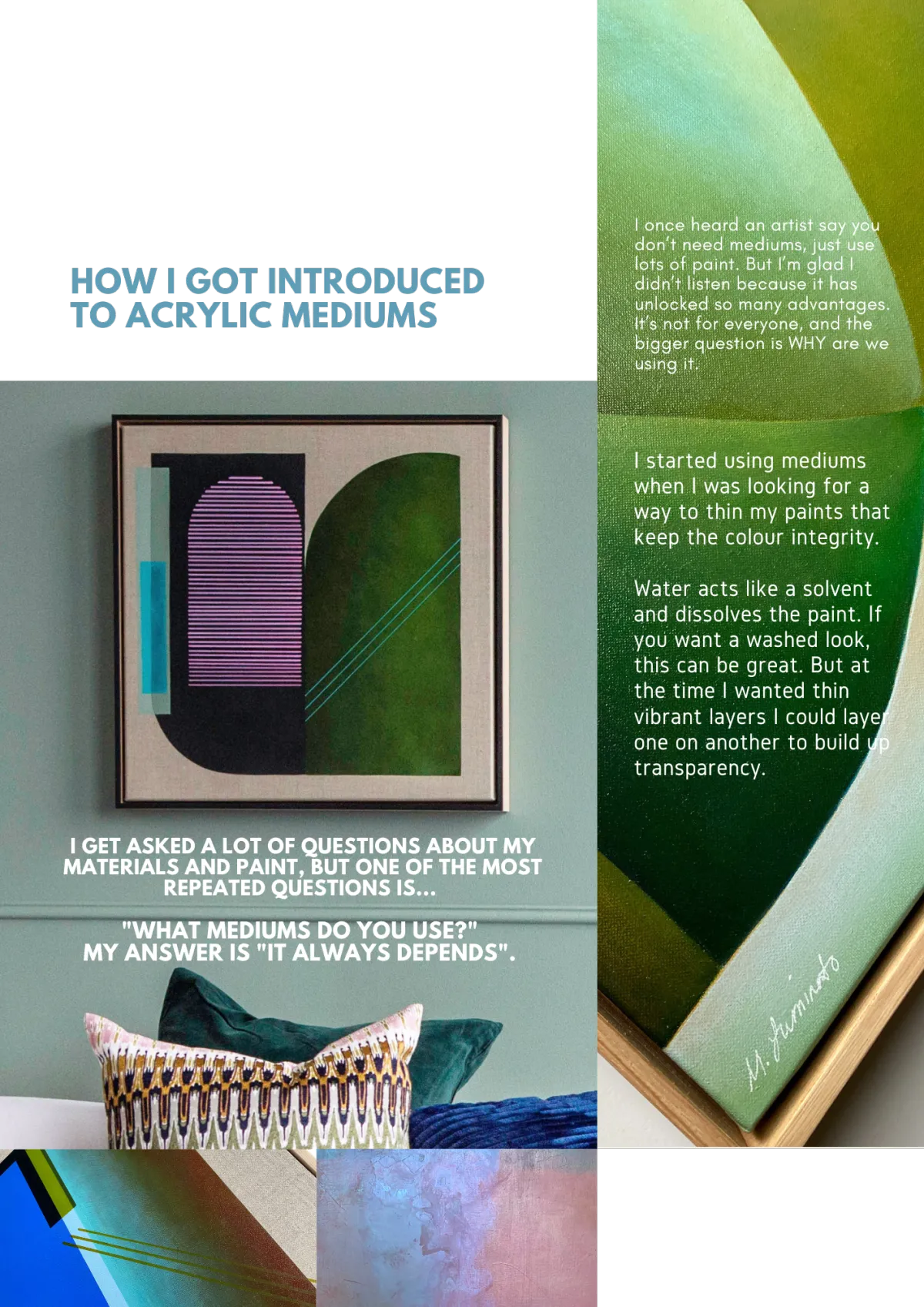
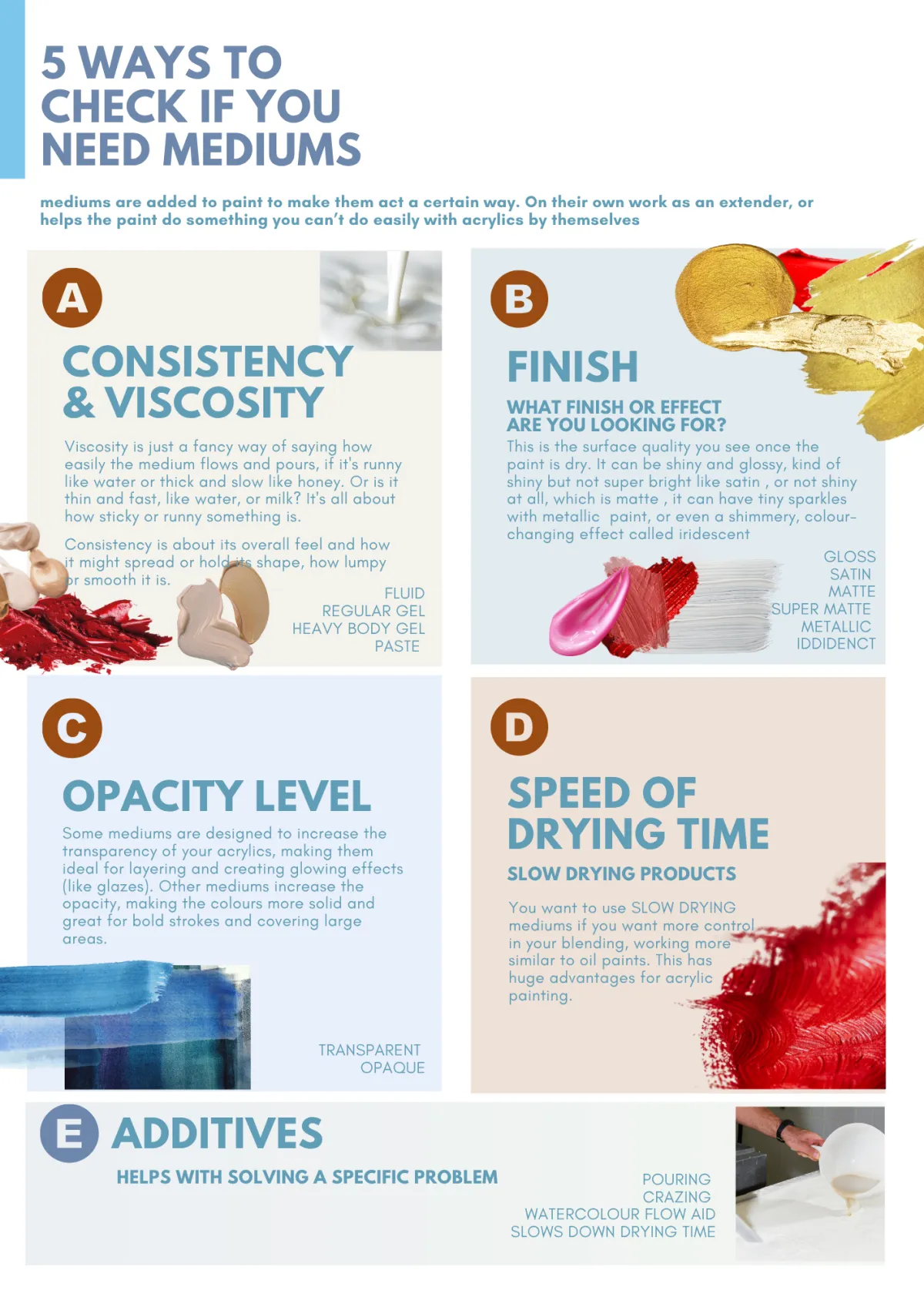
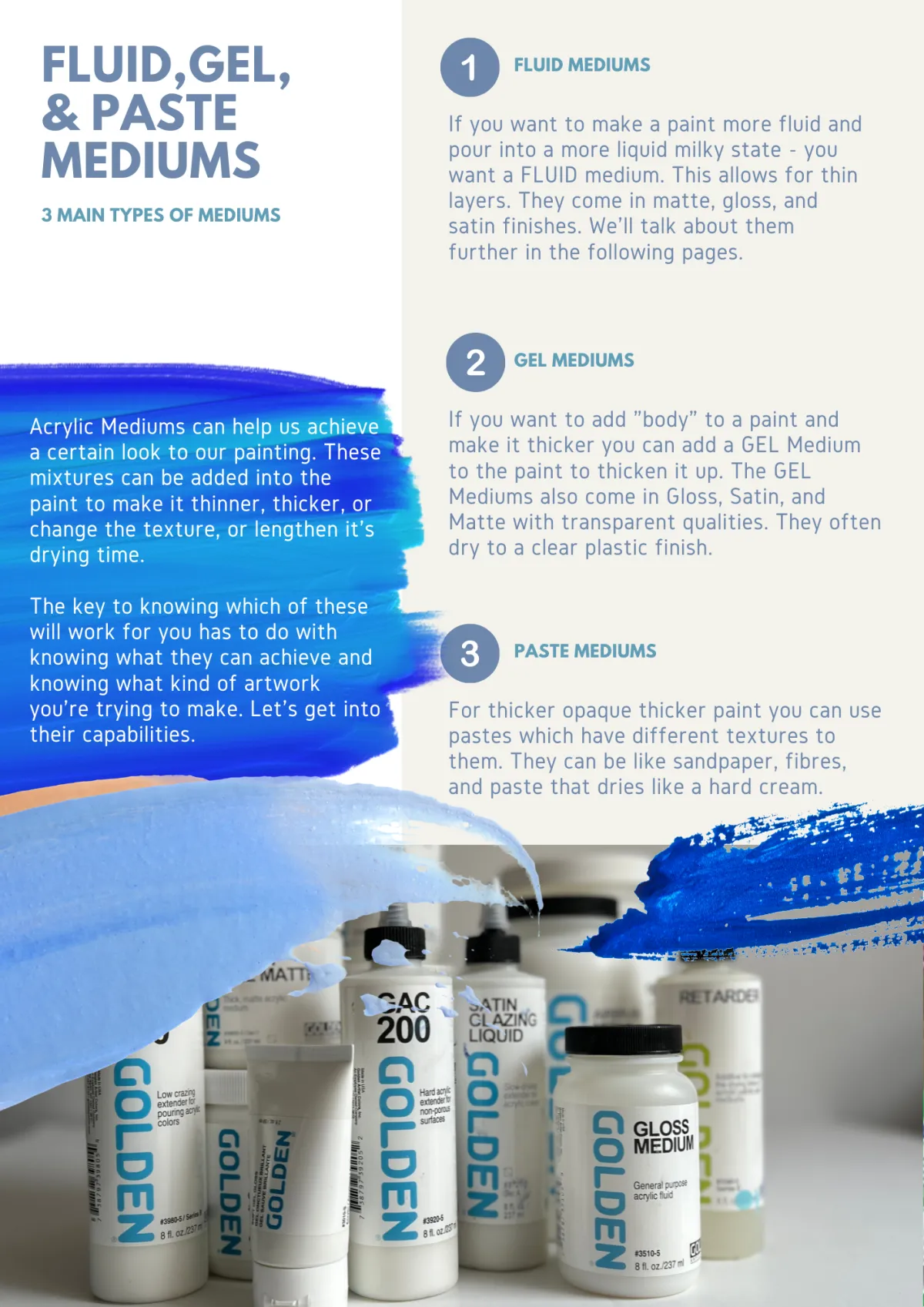
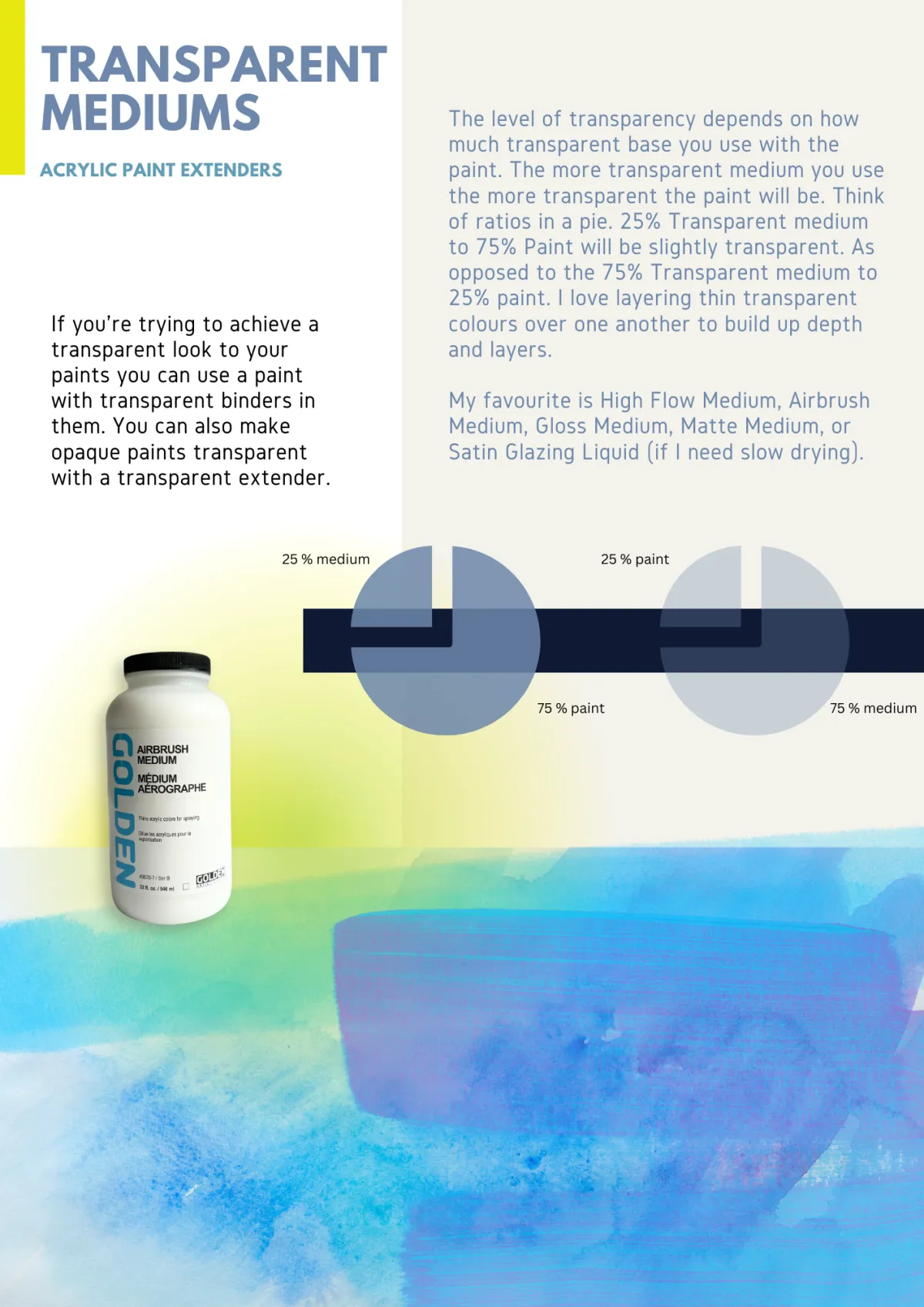
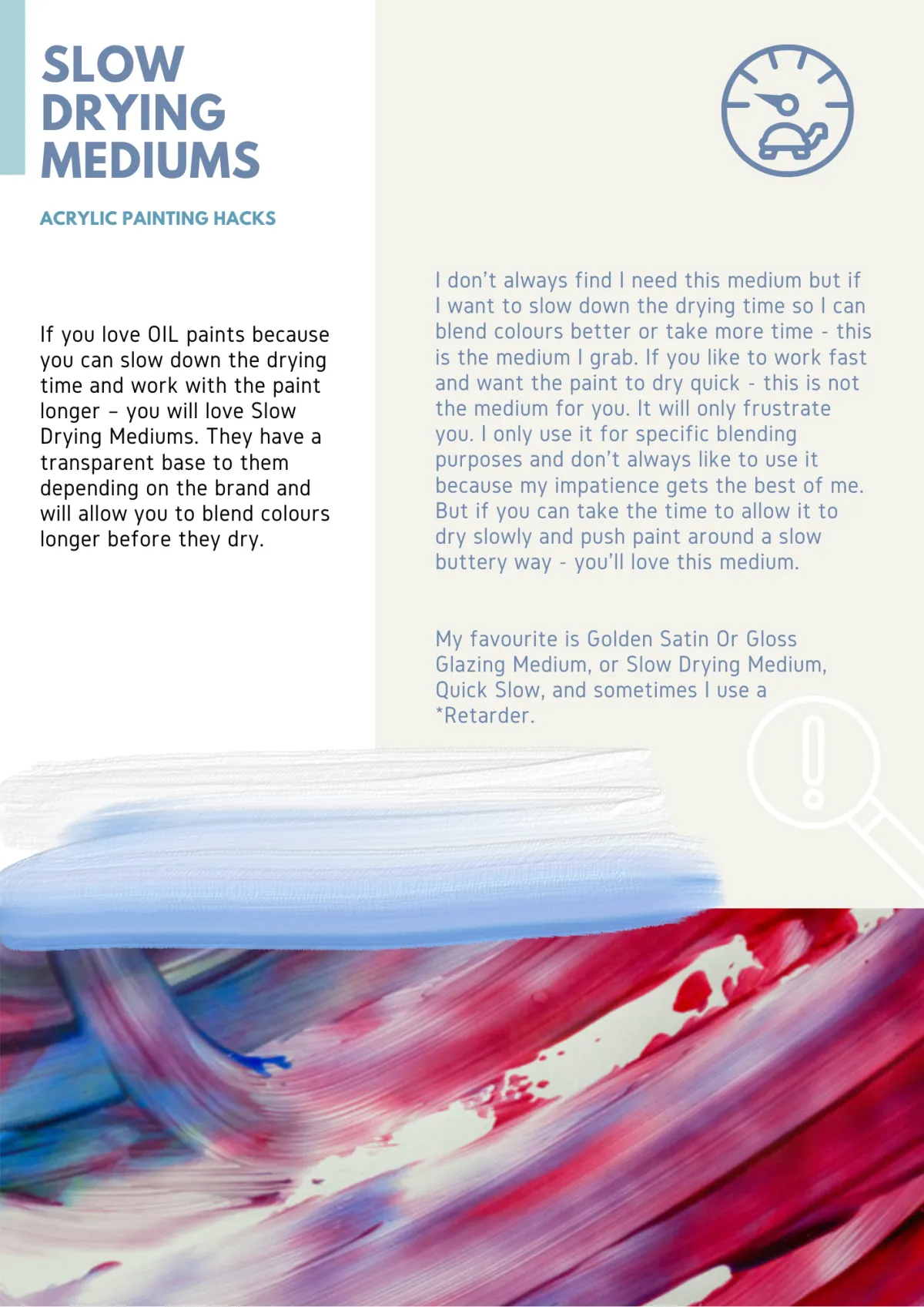
Which FINISH are you looking for in a GEL?
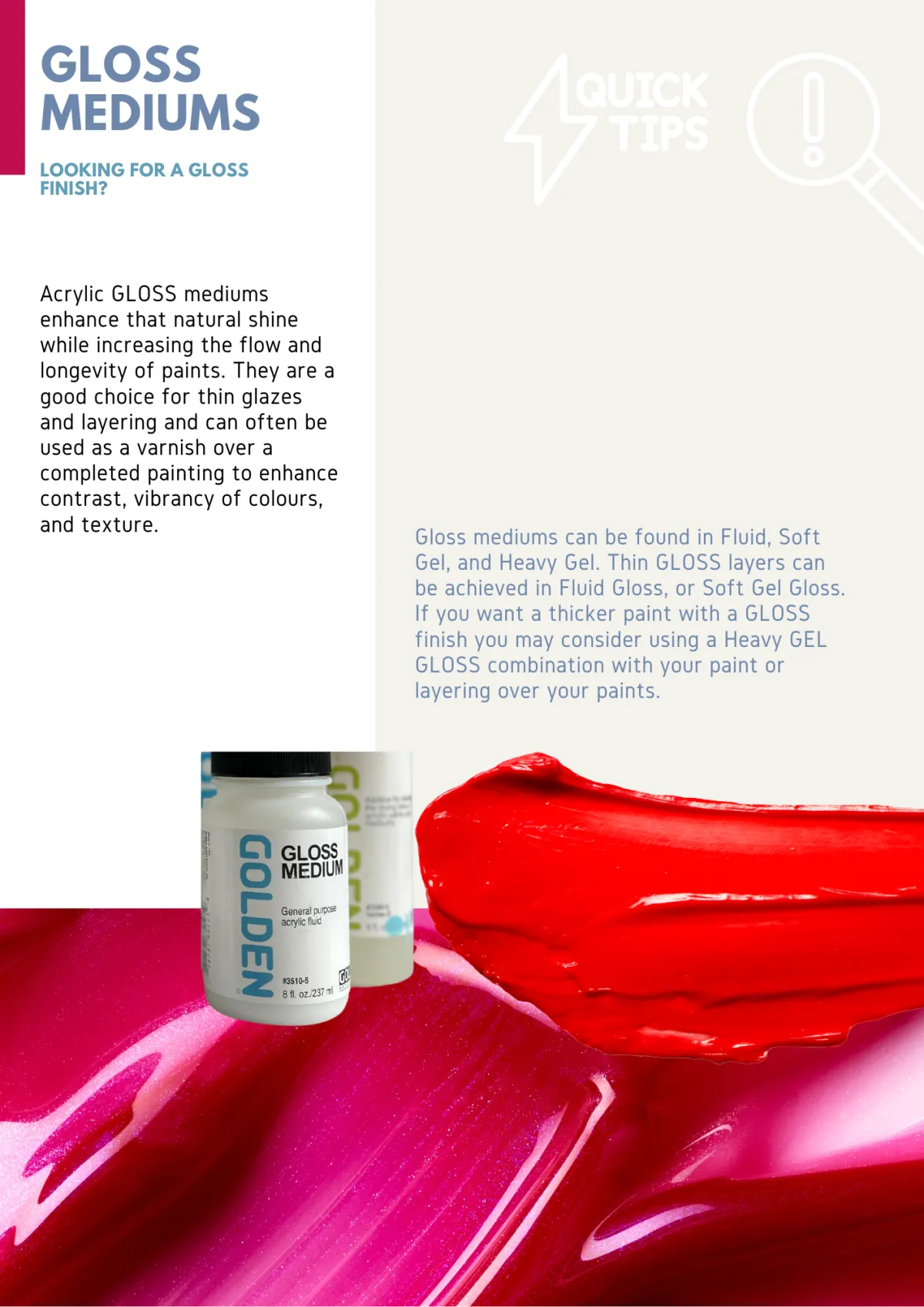
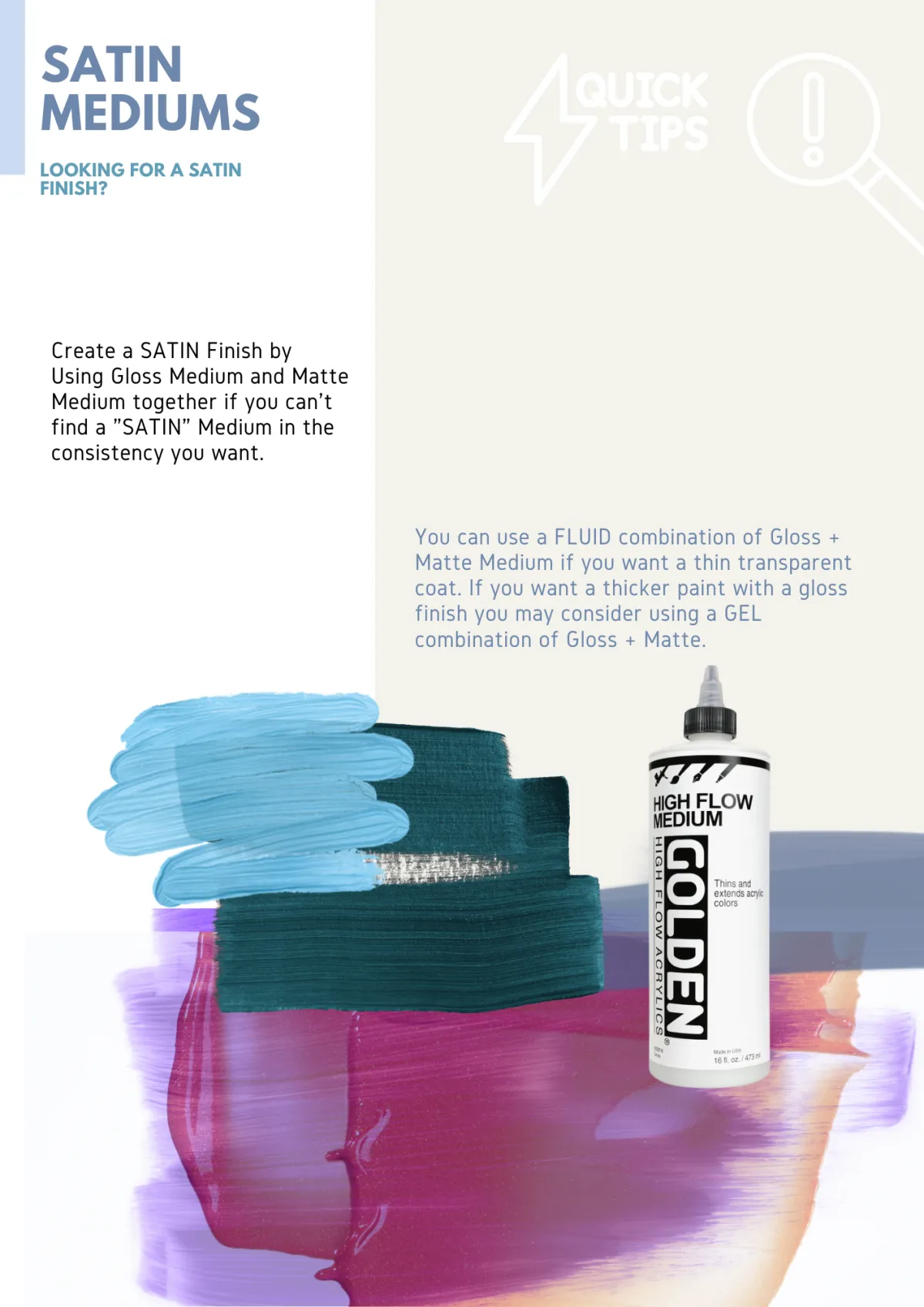
See recommendations below
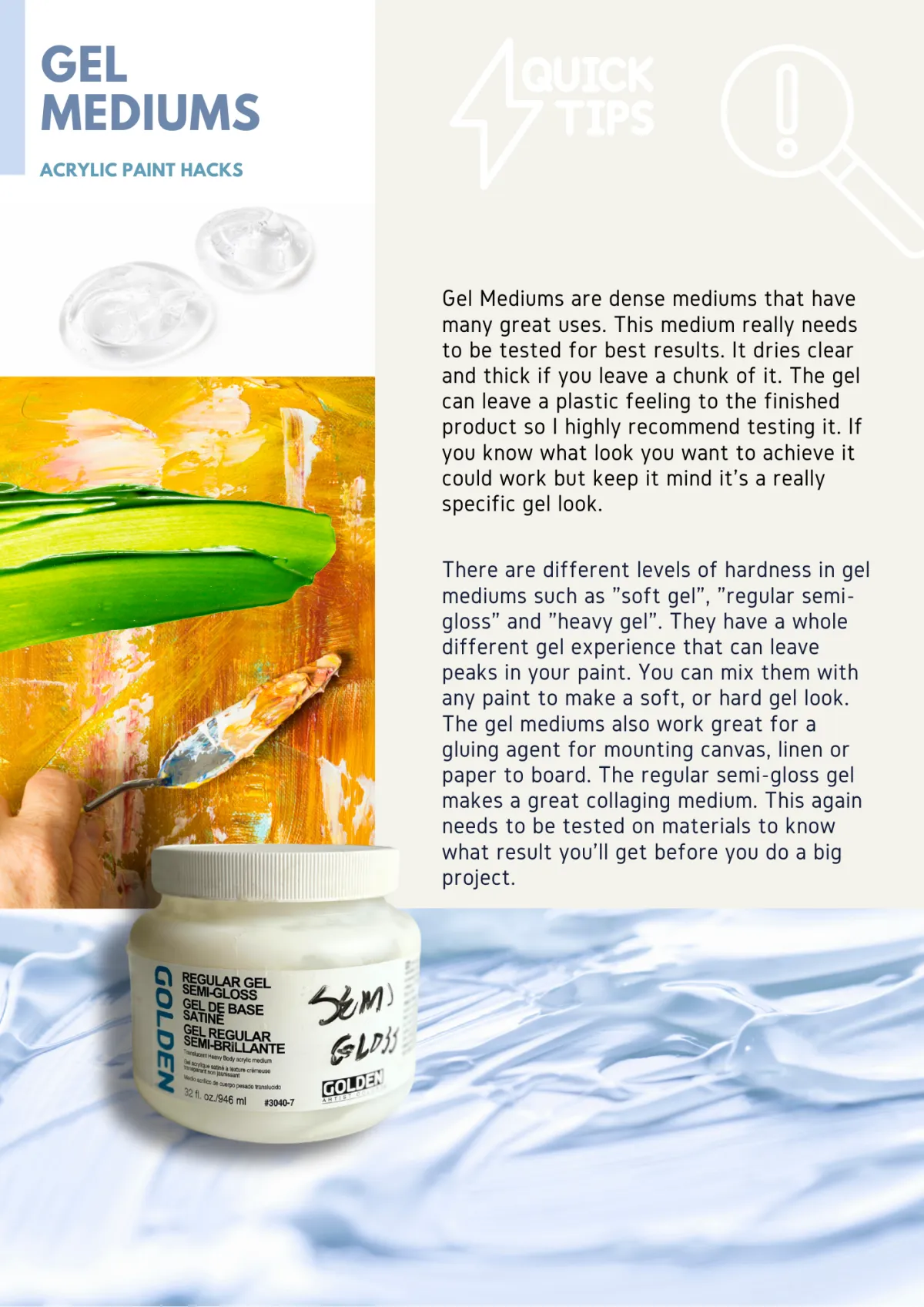
Acrylic Gel Mediums: Use Cases
Increases flow and spreadability of acrylic paint; ideal for smooth glazes and washes; maintains color intensity.
Examples: Glazing Medium, Fluid Medium.
Offers increased flow and spreadability with a semi-gloss finish. Suitable for transparent layers where a subtle sheen is desired.
Examples: Satin Glazing Liquid.
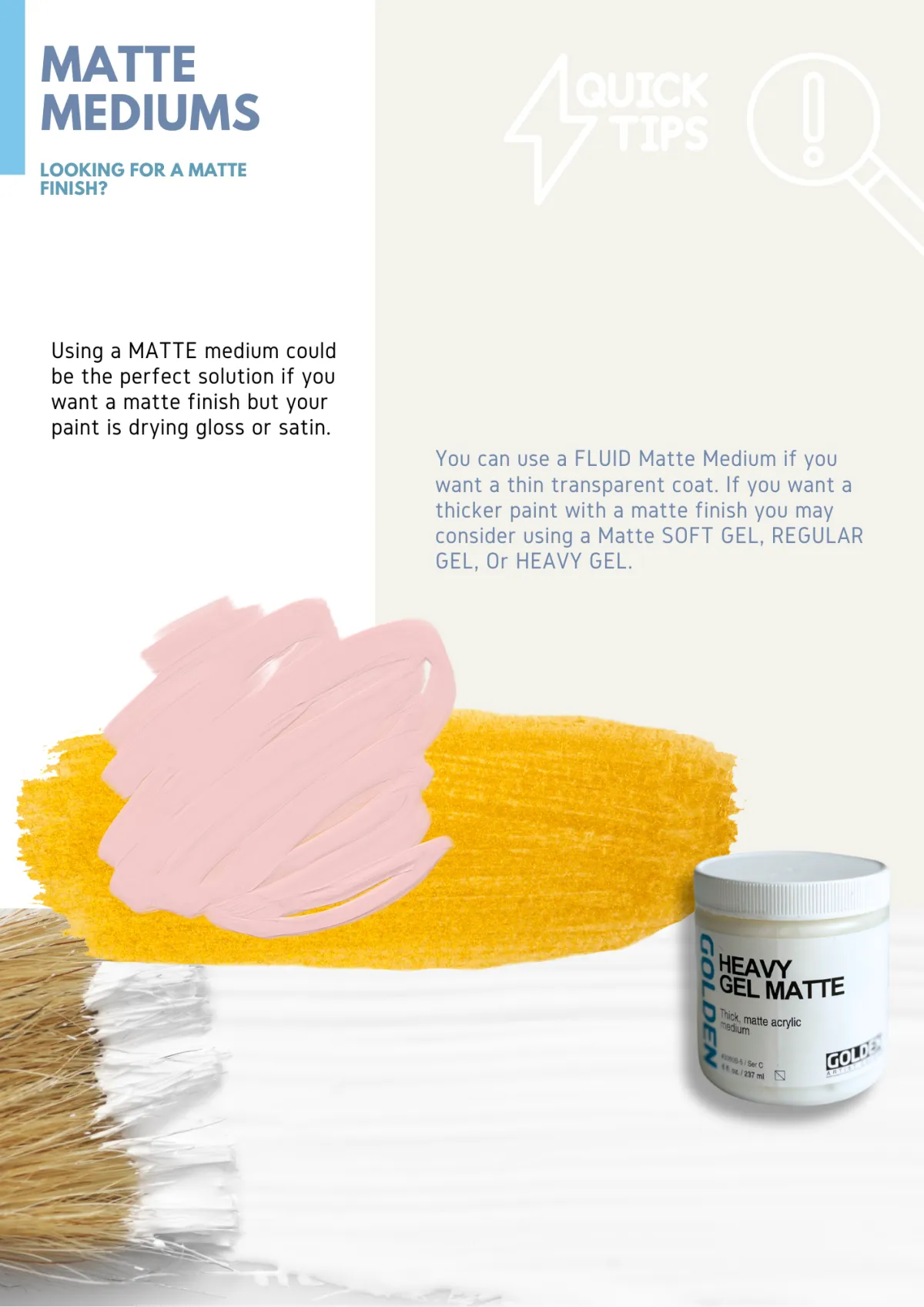
Increases flow and spreadability with a matte finish. Ideal for creating transparent layers with no shine.
Examples: Matte Medium.
Thins paint while maintaining body; suitable for glazes and transparent layers where some viscosity is desired.
Provides a balanced consistency between fluid and regular gel with a semi-gloss finish. Good for general mixing and transparent applications with a slight sheen.
Offers a soft, pliable consistency with a matte finish. Useful for transparent applications where a non-reflective surface is preferred.
Thickens paint for impasto and texture while maintaining transparency; good for thicker transparent layers or collaging.
Provides a thicker consistency than soft gel with a semi-gloss finish. Versatile for building texture and adhesion with a subtle sheen.
Offers a thick consistency with a matte finish, suitable for building texture or for use in collaging where a non-reflective, opaque appearance is desired.
Super thick, sets up for a thick transparent look; ideal for impasto and sculptural effects while retaining transparency.
Examples: Heavy Gel Medium.
Provides a very thick consistency with a semi-gloss finish, suitable for dramatic impasto and textural work where a subtle sheen is desired.
Offers a very thick consistency with a matte finish, excellent for creating pronounced textures and impasto effects with a non-reflective surface.
Acrylic Gel Mediums: Product Options
- Liquitex Professional Pouring Medium
- Golden Gloss Medium
- Winsor & Newton Acrylic Flow Improver
- Matisse MM9 Acrylic Painting Medium
- Mont Marte Gloss Medium
- Liquitex Professional Satin Pouring Medium
- Golden Satin Glazing Liquid
- Golden High Flow Medium
- Golden Airbrush Medium
- Winsor & Newton Galeria Satin Medium
- Matisse MM6 Polymer Satin Varnish
- Mont Marte Satin Medium
- Liquitex Professional Matte Medium
- Golden Fluid Matte Medium
- Winsor & Newton Galeria Matte Medium
- Matisse MM5 Matt Medium
- Mont Marte Matte Medium
- Liquitex Professional Soft Gel (Gloss)
- Golden Soft Gel (Gloss)
- Winsor & Newton Professional Acrylic Gloss Gel
- Matisse MM4 Gel Medium (Gloss)
- Mont Marte Soft Gel Medium (Gloss)
- Liquitex Professional Soft Gel (Satin)
- Golden Soft Gel (Satin)
- Winsor & Newton Professional Acrylic Satin Gel
- Matisse (Mix MM4 Gel with MM6 Satin Varnish)
- Mont Marte Soft Gel Medium (Satin)
- Liquitex Professional Soft Gel (Matte)
- Golden Soft Gel (Matte)
- Winsor & Newton Professional Acrylic Matte Gel
- Matisse MM30 Matt Gel Medium
- Mont Marte Soft Gel Medium (Matte)
- Liquitex Professional Gel Medium (Gloss)
- Golden Regular Gel (Gloss)
- Winsor & Newton Professional Acrylic Gloss Gel
- Matisse MM4 Gel Medium (Gloss)
- Mont Marte Gel Medium (Gloss)
- Liquitex Professional Gel Medium (Satin)
- Golden Regular Gel (Satin)
- Winsor & Newton Professional Acrylic Satin Gel
- Matisse (Mix MM4 Gel with MM6 Satin Varnish)
- Mont Marte Gel Medium (Satin)
- Liquitex Professional Gel Medium (Matte)
- Golden Regular Gel (Matte)
- Winsor & Newton Professional Acrylic Matte Gel
- Matisse MM30 Matt Gel Medium
- Mont Marte Gel Medium (Matte)
- Liquitex Professional Heavy Gel (Gloss)
- Golden Heavy Gel (Gloss)
- Winsor & Newton Professional Acrylic Heavy Gel
- Matisse MM2 Impasto (dries Satin)
- Mont Marte Heavy Gel Medium (Gloss)
- Liquitex Professional Heavy Gel (Satin)
- Golden Heavy Gel (Satin)
- Winsor & Newton Professional Acrylic Satin Heavy Gel
- Matisse MM2 Impasto Medium
- Mont Marte Heavy Gel Medium (Satin)
- Liquitex Professional Heavy Gel (Matte)
- Golden Heavy Gel (Matte)
- Winsor & Newton Professional Acrylic Matte Heavy Gel
- Matisse (Mix MM2 Impasto with MM5 Matt Medium)
- Mont Marte Heavy Gel Medium (Matte)
Acrylic Pastes & Texture Gels
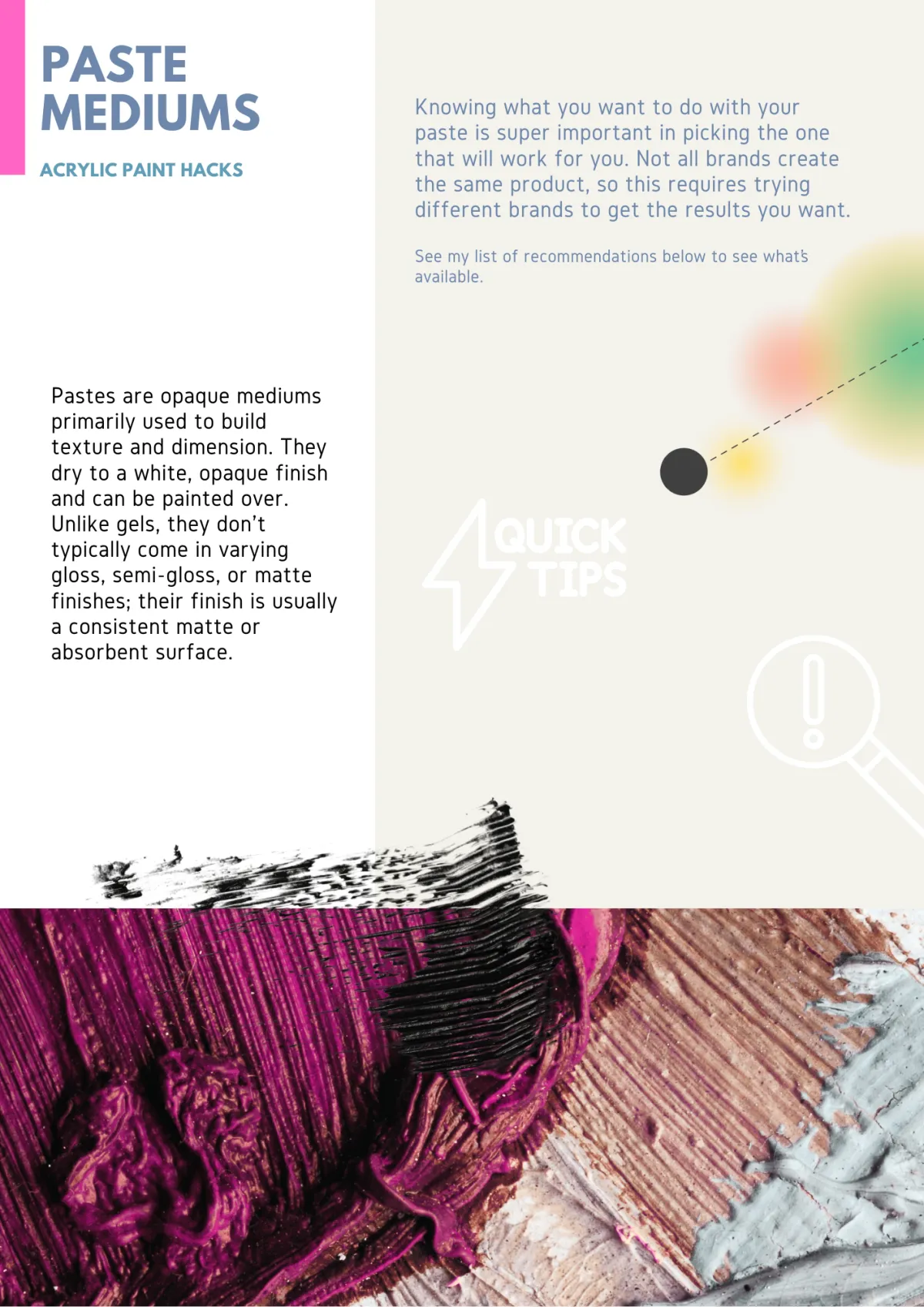
Impasto Molding Paste
Creates a strong, textural surface; dries to a hard, flexible, opaque finish.
Light Molding Paste
Fluffy, lightweight paste that dries matte white and can be painted over. Very flexible.
Heavy Molding Paste
Dense, heavy paste that dries matte white and can be painted over.
Fiber Paste
Dense paste that dries matte white with visible fibers; can be painted over. Creates a paper-like or fibrous texture.
Crackle Medium
Creates controlled cracks in the paint layer as it dries, revealing underlying colors or surfaces.
Sand Texture Gel
Contains fine sand particles, creating a gritty, sandy texture.
Glass Beads Texture Gel
Contains tiny clear glass beads, creating a whimsical, bubbly, light-reflective surface.
Black Lava Texture Gel
Contains uniform black specks, creating a satin sheen. Best when mixed with transparent or translucent acrylics for dark, speckled effects.
Ceramic Stucco Texture Gel
Fine-textured, cement-like, toothy surface. Accepts charcoal, pastels, and acrylics.
White Opaque Flakes Texture Gel
Rough, irregular surface with small opaque white flakes. Often best mixed with paint on the palette, creates a scaly or flakey appearance.
Iridescent Medium
Adds shimmer and pearlescence to paint. Can be a fluid or gel consistency depending on the specific product.

© Michele Luminato 2025 | design by Michele Luminato |
Uncover Your Unique Voice -
A Proven Journey to Generate Fresh Ideas & Spark the Art You Were Born to Create.
JOIN THE AWAKEN Priority list
Where you'll accelerate your journey to find your unique artistic voice, and leaving behind self-doubt and imposter syndrome for good.